नृत्त
Nritta
Pure dance
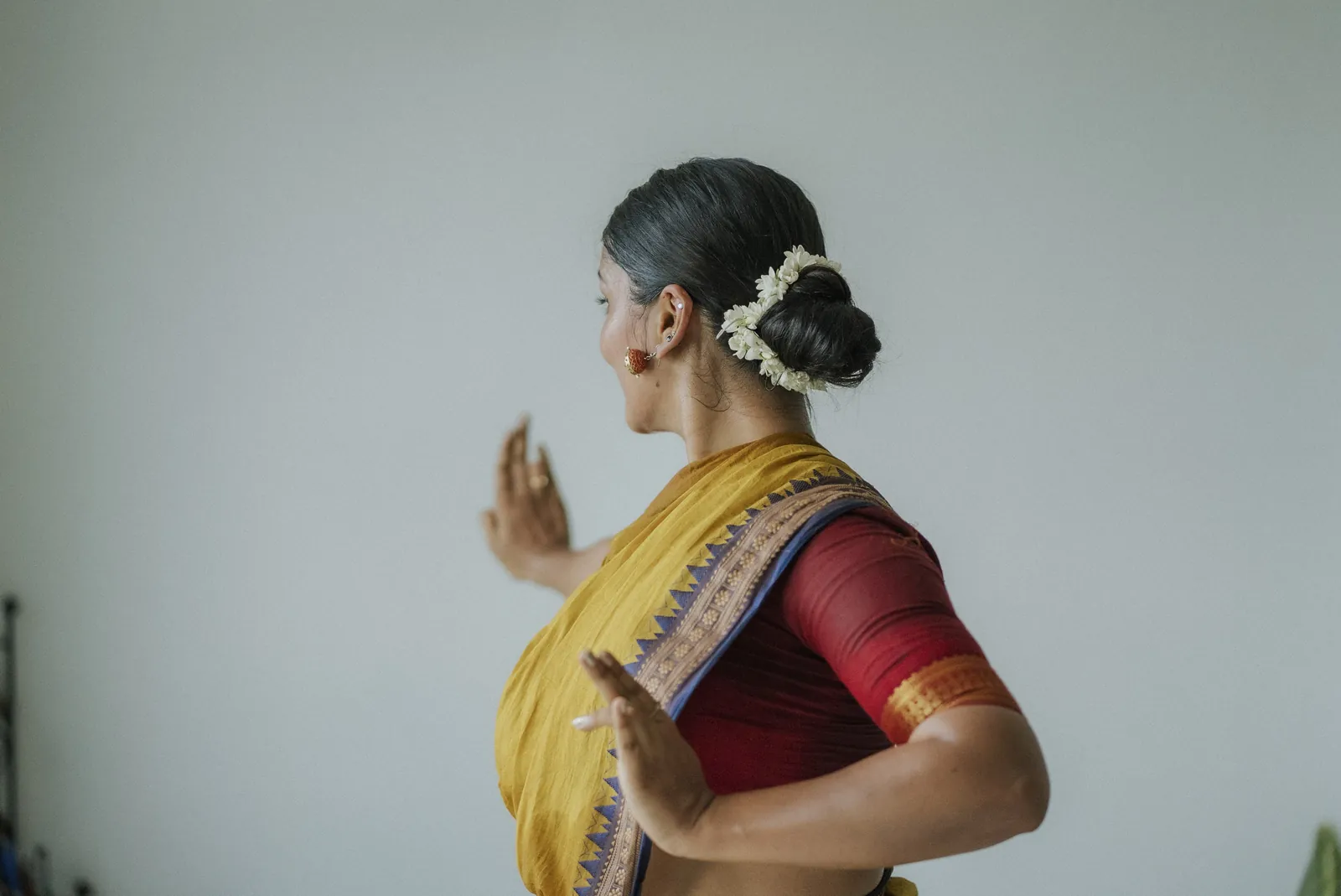
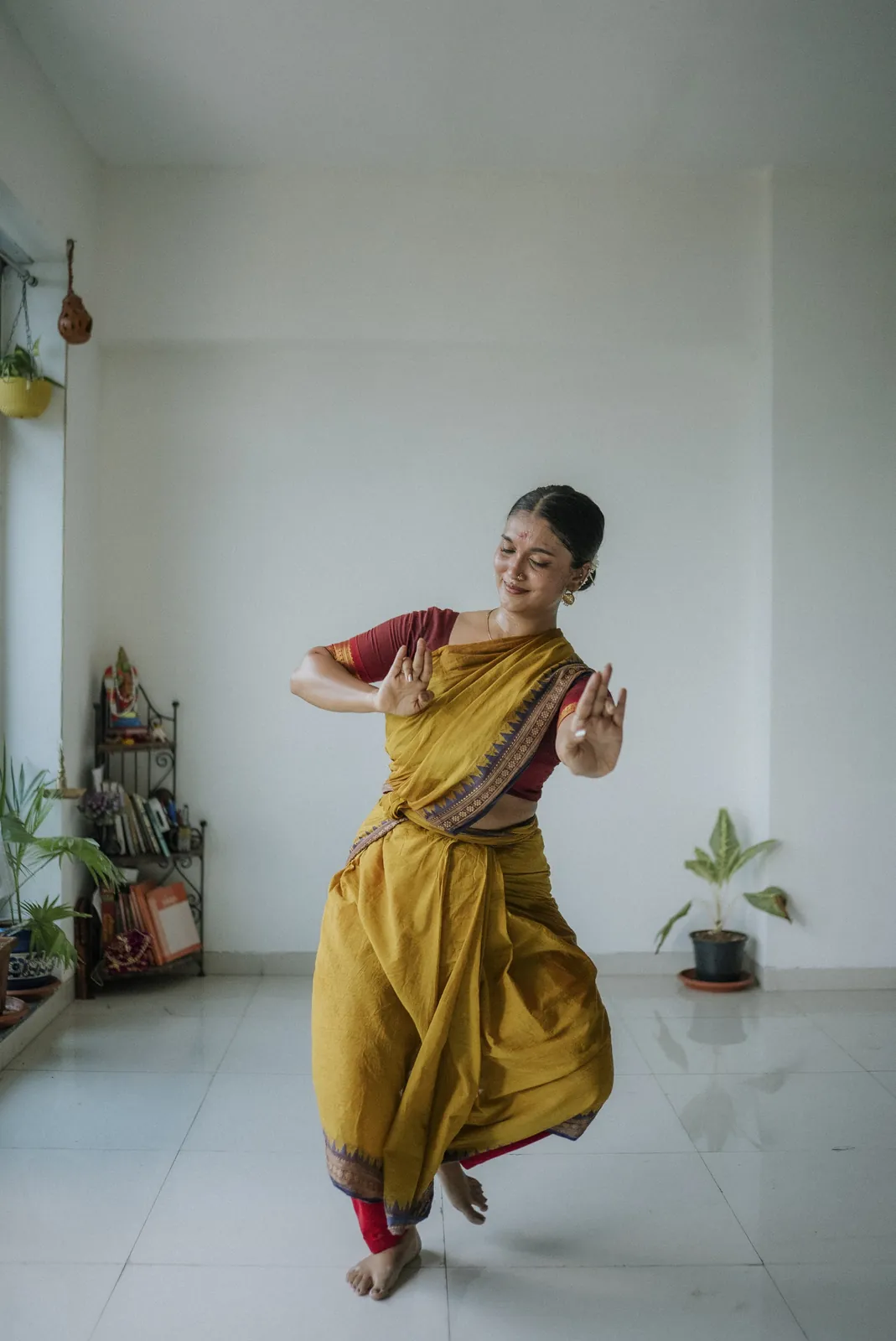
Focusing on rhythm, technique and movement. It includes adavus and other technical movements, without conveying a specific emotion or story.
The dance
One of India's oldest classical dance forms, from Tamil Nadu: a language of rhythm, geometry and expression.
What is Bharatanatyam?
Bharatanatyam is a classical dance form of South India, rooted in Tamil Nadu and recognised as one of India's major classical dances.
Its grammar is described in ancient treatises on performance such as the Natya Shastra and the Abhinaya Darpana. A dancer combines precise footwork, sculptural postures, a vocabulary of hand gestures and expressive storytelling, all set to Carnatic music.
At Indīvarā Arts, students learn Bharatanatyam as a complete art: not only the steps, but the rhythm, music, theory, history and aesthetics behind them.
Three aspects
Every Bharatanatyam performance moves between three ways of dancing.
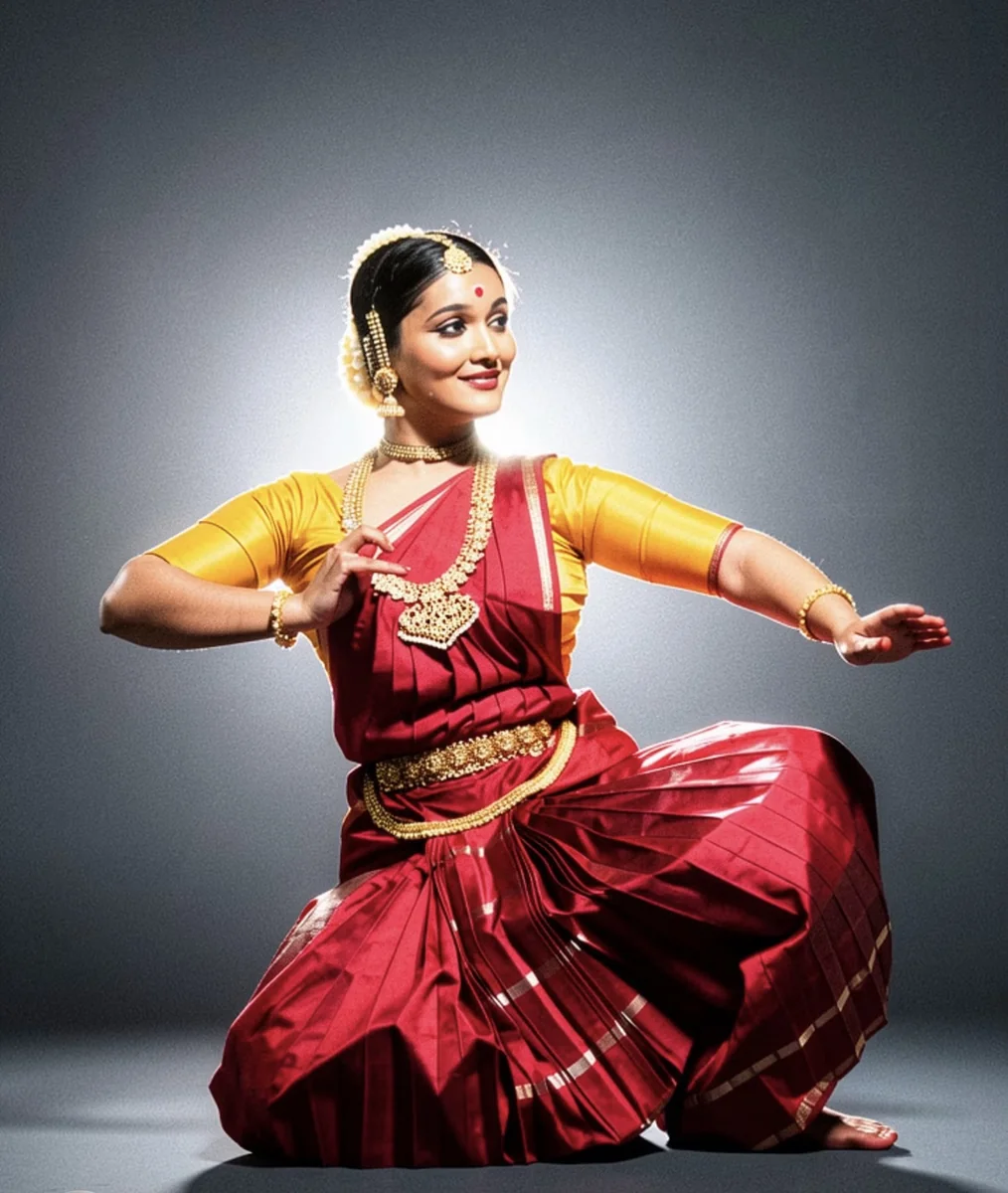
Pure dance
Focusing on rhythm, technique and movement. It includes adavus and other technical movements, without conveying a specific emotion or story.
Expressive dance
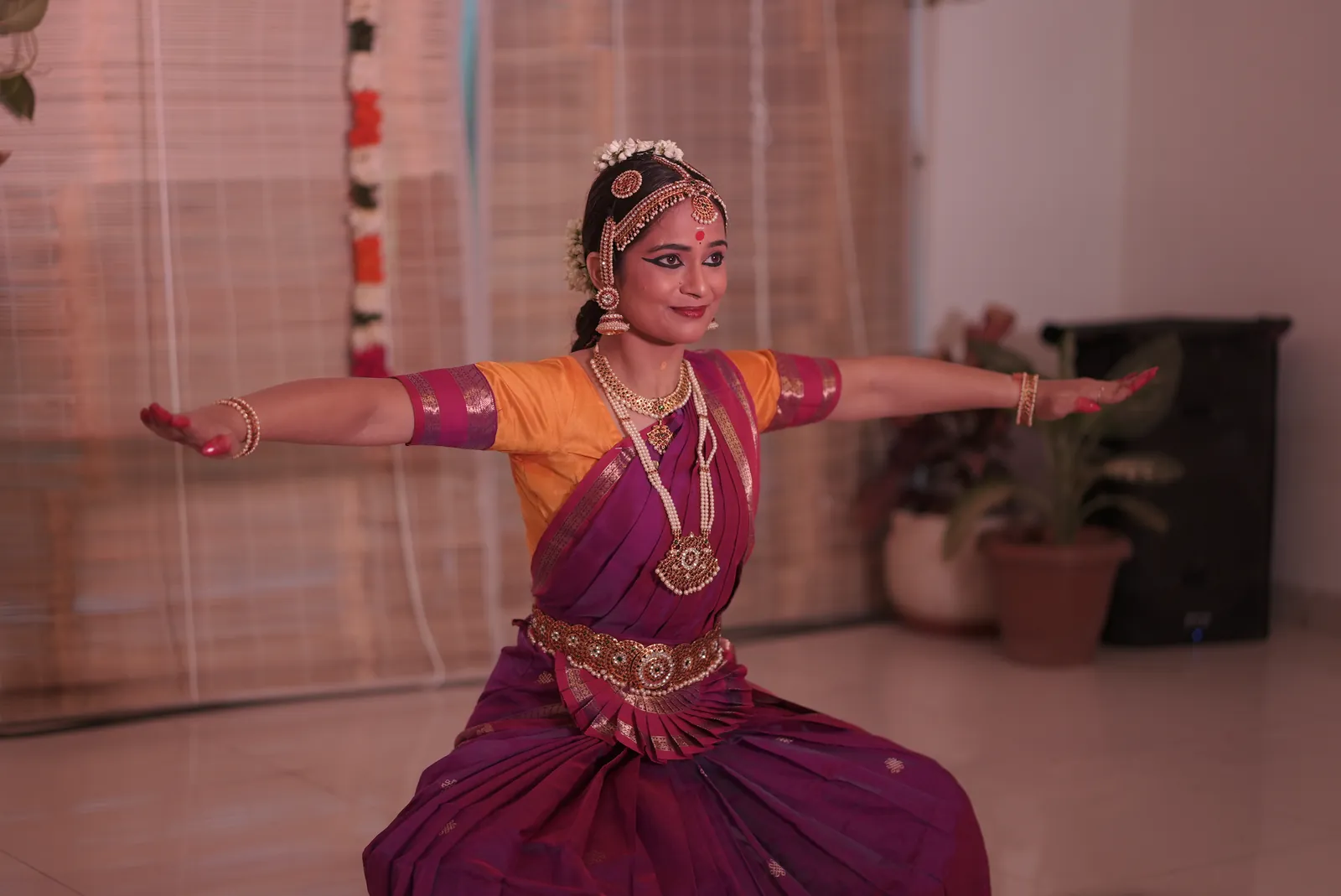
Combining movement with abhinaya. It explores bhava and rasa to communicate emotions, meanings and ideas.
Dramatic representation · dance-drama
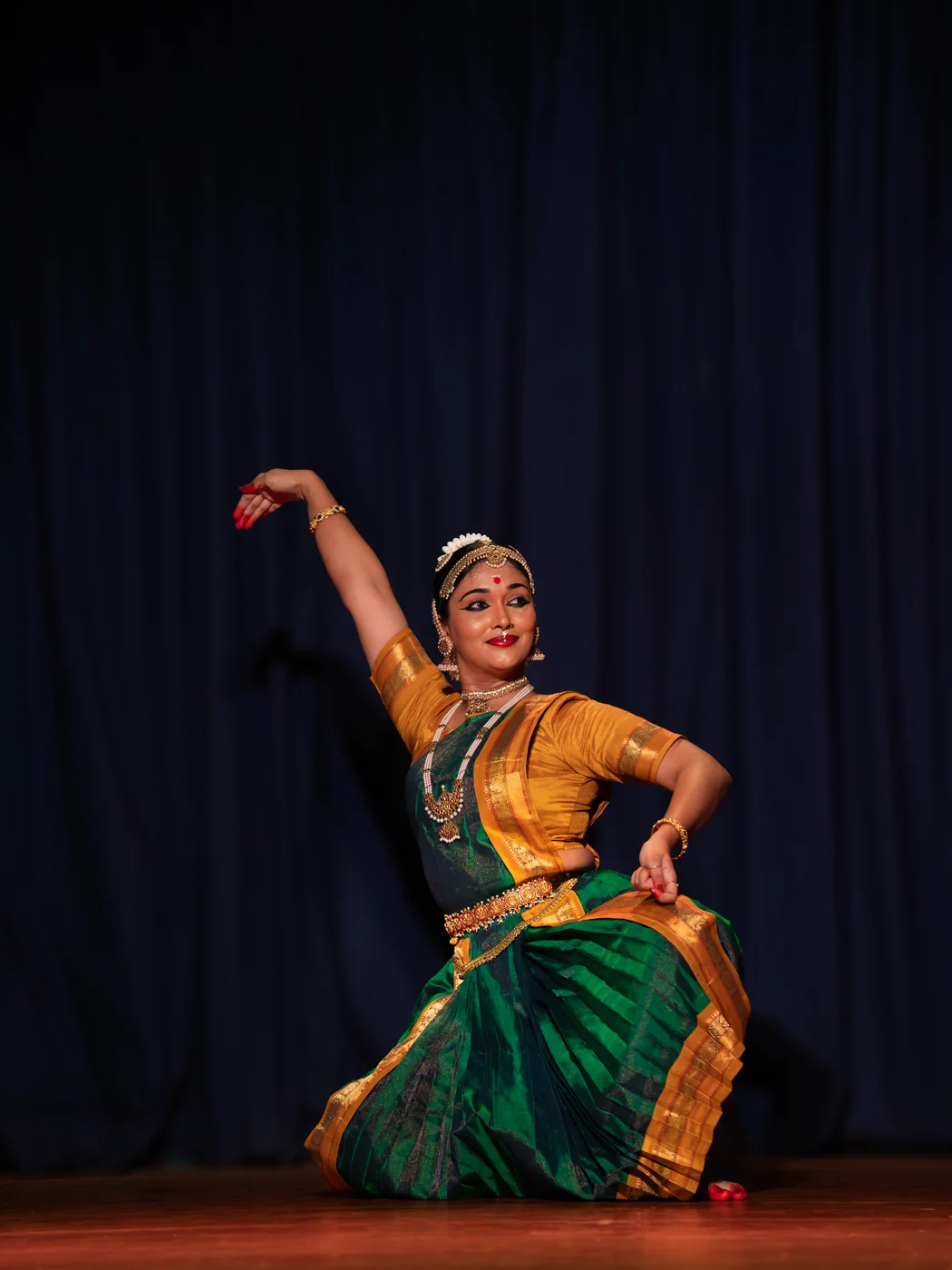
Where Nritta and Nritya come together to tell a story. It often portrays narratives from mythology, literature or traditional stories through movement, expression, music and characterisation.
Our lineage
Kalakshetra was founded in Chennai in 1936 by Rukmini Devi Arundale and became one of the most influential institutions in the modern history of Bharatanatyam.
The Kalakshetra style is known for its clean, geometric lines, precise footwork, disciplined posture and a refined sense of aesthetics.
Our founder, Srushti Loya, completed her graduation and post-graduation in Bharatanatyam at the Kalakshetra Foundation. Indīvarā Arts teaches in this tradition.
Meet our founderThe margam
A traditional Bharatanatyam recital follows a set order of items called the margam, or “path”. Tap through it.
Often the opening item. A short invocation in pure dance that “blossoms” the body, beginning with the eyes, neck and shoulders and opening into full movement. It warms the dancer up and greets the audience.
A pure dance piece set to musical notes (swaras) in a raga. Intricate adavu patterns show the dancer's command of rhythm and line.
The first item with words and abhinaya. The dancer interprets a song, often in praise of a deity, combining expression with rhythmic passages.
The longest and most demanding item of the recital. It weaves complex pure-dance passages with deep expressive sections, testing the dancer's stamina, technique and abhinaya.
A slower, lyrical piece focused entirely on abhinaya. The dancer explores emotion in depth, often love and devotion.
A lighter expressive piece, usually brisker than a padam, with playful or romantic themes.
A brisk, joyful finale of pure dance, full of sculptural poses and rhythmic flourishes, set to rhythmic syllables.
A short closing prayer that ends the recital with gratitude to the divine, the teacher and the audience.
Items and their order can vary between traditions and recitals. Our Advanced level trains students in Varnam, Padam, Javali and Thillana.
Building blocks
The music
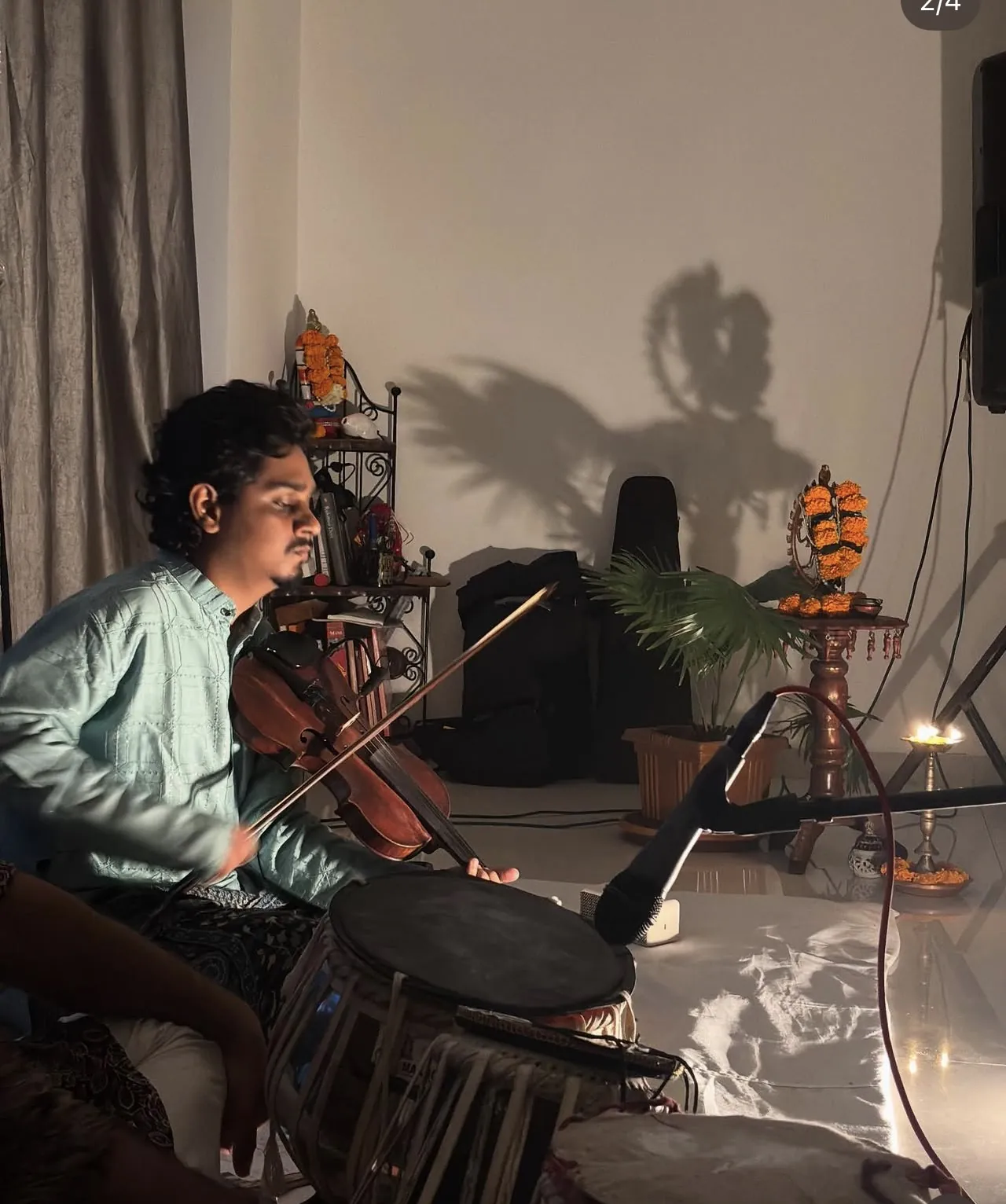
Bharatanatyam is performed to the classical music of South India. A live ensemble usually brings together four voices:
Conducts the performance with cymbals and recites the rhythmic syllables.
Sings the composition the dancer interprets.
The double-headed drum that drives the rhythm.
Such as violin, flute or veena, carrying the melody.
Learn Bharatanatyam